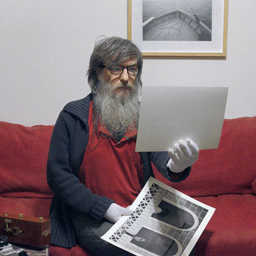
Hi Jochen, welcome!
The quality is really excellent. I’m running some tests with the latest CP3 update, which introduces the new feature of edge detection for color negative reproduction. I’ve been doing this mainly as a beta tester to make sure there aren’t any bugs, as can sometimes happen with new updates. For now, I can confirm that, even though I haven’t tested it thoroughly, I haven’t found any bugs.
And what can I say—I took a color negative scanned with a digital camera, loaded it into Color Pos using the DC function, compared it to an old version I’d created without CP, and was impressed by the color accuracy and overall quality.
I see you’re making prints using a Nikon Z8 and the 60mm macro lens—an excellent choice. But I also see you have a Leica for color photography, so I assume you have Leica lenses as well.
I can tell you that almost all of my negatives from the 1990s to the present were shot with Leica lenses, so to reproduce them I use my Fujifilm X-Pro2 with a Summicron lens and extension tubes to achieve a 1:1 ratio. The result is a seamless transition from a Leica frame to a Leica file that doesn’t compromise the texture of my images in the slightest. Obviously, I find this solution ideal even for frames shot with Zeiss rather than Sigma because, in any case, the final step goes through a Leica lens, and if you have this kind of equipment, you know what I’m talking about. But that’s not all. There’s nothing to say about macro and autofocus lenses, which, thanks to their focusing precision and sharpness, extract every imaginable detail from the negative. But we know that digital camera reproduction makes the file a bit less textured and a bit clinical/digital (precisely because of this precision) compared to a scan done with a good scanner. Well, personally, with the high-resolution Leica lens and manual focus, from my perspective, it slightly diminishes the clinical quality of the file. The result is wonderful to me precisely because I start with a Leica frame and end up with a Leica file; it’s almost a doubled Leica effect because I already have the Leica characteristics in the frame that I’m re-photographing with a Leica lens that possesses those characteristics. In fact, in most cases, the lens is the same; first it photographed reality, and then it re-photographed the frame

I agree, it’s not really necessary to go that far, but if you have one at home, why not use it, I say.
Compared to an autofocus macro lens, my process is a bit more laborious (extension tubes and manual focusing make it a bit easier to mess up), but when I compare the results with a Fujifilm autofocus lens and my manual Leica, there’s no comparison.
In any case, with CP3, whatever happens, it’ll be a success!

 but maybe its because its Easter weekend... everyone is looking for bunnies, eggs and nice photos?
 Since I have actually been asked about this twice today, I suspect I should make that passage bold or otherwise more prominent on the page.